Introduction
Asbestlint a word that once referred to asbestos tape has taken on a revolutionary new meaning in the modern era. For decades, asbestos has been a silent threat, embedded in the walls, floors, and ceilings of buildings worldwide. Its use in insulation, construction, and manufacturing created lasting safety and health concerns. Today, as awareness and technology evolve, Asbestlint stands at the forefront of a new chapter one that prioritizes innovation, safety, and responsibility.
This article explores the evolution of Asbestlint: from its origins in asbestos-based materials to its rebirth as a groundbreaking, non-invasive detection system that promises to change the way we manage and understand asbestos risks.
Understanding Asbestlint
Originally, “asbestlint” referred to asbestos-based materials fibrous tapes or ribbons used for insulation and sealing. Their heat resistance made them indispensable across industries, but that advantage came with a cost. When disturbed, asbestos fibers become airborne, leading to serious diseases like asbestosis, lung cancer, and mesothelioma.
However, in modern usage, Asbestlint represents a new technological innovation: a cutting-edge system designed to detect asbestos safely, efficiently, and without physical intrusion. This advancement marks a major step toward protecting public health and reducing unnecessary costs in building management and renovation.
The Legacy of Asbestos
To appreciate the innovation behind Asbestlint, we must first understand the scale of the asbestos problem. Once called a “miracle mineral,” asbestos was widely used in insulation, floor tiles, roofing, and consumer goods for most of the 20th century. Its durability and fire resistance made it seem ideal — until its deadly health effects became clear.
Microscopic asbestos fibers, when inhaled, remain in the lungs for decades, causing severe illnesses. The global response was to ban or heavily regulate its use, leading to an entire asbestos abatement industry built around detection and removal. Yet, traditional methods have always been risky, invasive, and expensive.
The Old Method: Costly and Dangerous
Until recently, asbestos detection depended on intrusive sampling. Inspectors had to physically cut into walls or ceilings to extract material for lab testing. This process not only caused damage but also risked releasing toxic fibers. Even when handled carefully, testing was slow and often inaccurate due to limited sampling points.
Worse, materials that merely resembled asbestos were often “presumed hazardous,” forcing costly removal even when safe. This created unnecessary expenses for schools, homeowners, and businesses — all while endangering workers.
The need for a precise, non-invasive, and fast detection system was clear. That’s where modern Asbestlint comes in.
The Asbestlint Breakthrough
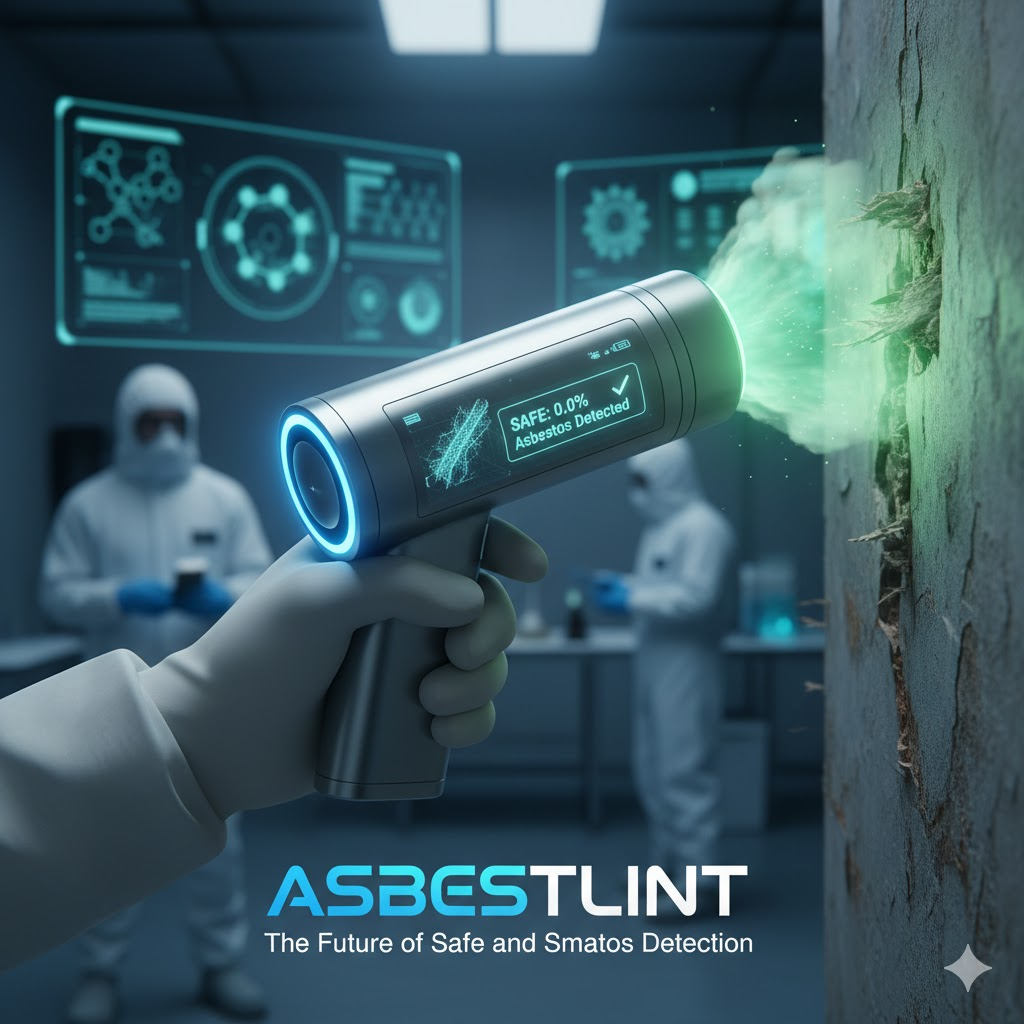
Modern Asbestlint combines Laser-Induced Breakdown Spectroscopy (LIBS) with artificial intelligence to safely identify asbestos within seconds without breaking into walls or ceilings.
Here’s how it works:
-
Laser Pulse: A handheld or robotic Asbestlint device fires a micro-laser at a surface.
-
Plasma Generation: The laser vaporizes a microscopic portion, creating a light-emitting plasma.
-
Spectral Analysis: The emitted light is analyzed to detect the unique “fingerprints” of asbestos minerals.
-
AI Recognition: The system’s AI compares results with an extensive database of asbestos signatures.
This process provides instant, reliable identification all while keeping workers and occupants safe from exposure.
Applications Across Industries
The introduction of Asbestlint is reshaping how different industries approach safety and restoration.
-
Construction and Renovation: Contractors can instantly scan materials before drilling or cutting, preventing exposure and saving time.
-
Public Schools: Non-invasive scanning allows rapid inspection without disrupting classes or spending millions on unnecessary abatement.
-
Disaster Response: Emergency teams can map asbestos in damaged buildings, ensuring safe entry and rescue operations.
-
Historic Preservation: Sensitive heritage buildings can be scanned without damaging valuable structures or artwork.
In every case, Asbestlint offers speed, precision, and safety — three qualities long missing in traditional asbestos management.
Health and Environmental Safety
Asbestlint’s greatest contribution lies in protecting lives. By minimizing the need for destructive sampling, it dramatically reduces the risk of airborne fiber release. Workers can now detect and map asbestos before touching a single surface, ensuring compliance with safety standards and preventing accidental exposure.
Environmentally, Asbestlint reduces waste by identifying only contaminated materials for removal. This prevents unnecessary disposal of safe materials, cutting both costs and environmental harm.
Legal and Ethical Implications
Legal frameworks around asbestos are complex and vary globally. Failure to follow safety regulations can result in lawsuits, fines, or criminal liability. The precision of Asbestlint’s mapping and reporting tools helps organizations meet compliance standards and document every step of their asbestos management process.
Ethically, this technology also represents a step forward shifting the focus from reactive cleanup to proactive prevention. It reflects a growing global commitment to transparency, worker safety, and sustainable practices.
The Future: Smarter, Safer, and Sustainable
The impact of Asbestlint goes far beyond asbestos detection. It symbolizes a shift in how we manage risks in the built environment. As industries embrace smart technology, systems like Asbestlint will become integral to environmental monitoring, occupational safety, and building health management.
Researchers are also exploring ways to integrate Asbestlint’s mapping system with 3D digital twins, allowing property owners to track and update safety data over time. These advancements pave the way for smarter, safer cities that protect people and resources simultaneously.
Conclusion
Asbestlint is more than just a technology it’s a turning point. From a term once linked with danger to a tool that empowers safety, it represents how innovation can transform even the darkest legacies into opportunities for progress.
By enabling fast, accurate, and non-invasive detection, Asbestlint reduces costs, minimizes health risks, and enhances compliance across industries. It illuminates what was once invisible the “ghost” of asbestos that haunted our buildings and replaces fear with knowledge, precision, and control.
In a world still grappling with the remnants of 20th-century industrial progress, Asbestlint offers hope. It shows that through awareness, science, and responsibility, we can finally lay the asbestos legacy to rest — and build a future that’s not only stronger but safer for generations to come.


