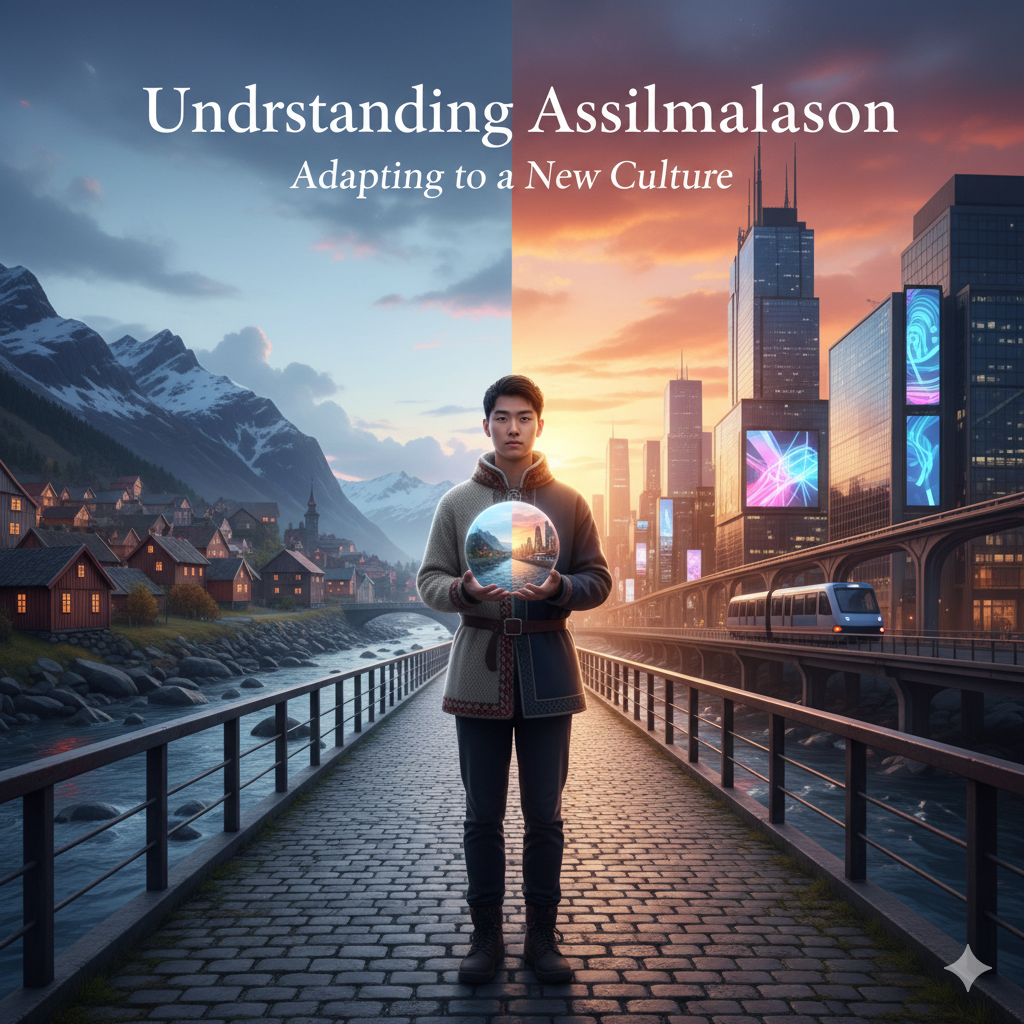
When I think about the term “assimilasjon”, I’m instantly taken into a world shaped by culture, identity, and change. Assimilasjon, or assimilation, is the process through which individuals or groups gradually adopt the customs, language, and behaviors of another group—often the dominant one in a society. This process is a fascinating intersection of history, psychology, and sociology, affecting millions around the world, from immigrants seeking new opportunities to indigenous communities navigating modern life.
Let’s dive deep into what assimilasjon really means, how it happens, and why it matters today.
What Is Assimilasjon?
The word comes from the Latin “assimilare,” meaning “to make similar.” In modern usage, it describes how people adjust to a new cultural environment. But it’s more than just learning a new language or wearing different clothes. Assimilasjon involves adopting new values, behaviors, and sometimes even a new sense of identity.
It can happen voluntarily—when someone wants to fit in—or be forced through social, political, or economic pressures. While some people navigate it smoothly, others struggle with identity conflicts, stress, and the feeling of being “in between cultures.”
The Psychology Behind Cultural Adaptation
Researchers have identified two main types of adaptation during assimilasjon:
-
Psychological adaptation – How well someone feels emotionally and mentally while adjusting to a new culture.
-
Socio-cultural adaptation – How well someone fits into the new society through behaviors, social skills, and understanding cultural norms.
Mental Health Impacts
The effects of assimilasjon on mental health can vary. Acculturative stress arises from navigating two cultural worlds, often leading to anxiety, depression, or difficulties at work or school. However, research shows that maintaining ties to your original culture while adapting to a new one—what’s called biculturalism—leads to better self-esteem, less anxiety, and stronger family relationships.
Types of Assimilasjon
Assimilasjon isn’t a one-size-fits-all process. Experts often categorize it into different levels:
-
Structural Assimilasjon – Entering mainstream institutions like schools, workplaces, and social organizations. Economic necessity often drives this quickly.
-
Cultural Assimilasjon – Adopting language, customs, food habits, dress, and traditions. Language usually comes first, followed by behavioral changes.
-
Identificational Assimilasjon – The deepest level, where people begin identifying with the dominant group over their minority identity. This change often takes generations.
-
Marital Assimilasjon – Intermarriage between groups, creating blended identities and accelerating cultural exchange. Children from these unions often develop bicultural competencies naturally.
| Aspect | Assimilasjon | Integration |
|---|---|---|
| Cultural Identity | Replaced by dominant culture | Maintained alongside new culture |
| Language Use | Heritage language often lost | Bilingual competency encouraged |
| Community Ties | Weakened original connections | Strong ties to both communities |
| Psychological Outcomes | Higher stress, identity conflict | Better mental health, self-esteem |
| Social Acceptance | Expected conformity | Celebrates diversity |
Key takeaway: While assimilasjon often replaces original culture, integration allows participation without losing your roots.
Factors That Shape Assimilasjon
Several elements influence how quickly and deeply someone assimilates:
-
Language Acquisition: Younger individuals often learn new languages faster, affecting generational differences.
-
Education: Schools play a huge role in transmitting culture. Curriculum choices can either support cultural preservation or accelerate assimilasjon.
-
Economic Pressure: Financial necessity may push individuals to adopt behaviors that improve job prospects.
-
Social Acceptance: Communities that embrace diversity allow smoother adaptation, while hostile attitudes force quicker cultural abandonment.
Modern Examples
Immigration to Europe highlights contemporary challenges. UNESCO warns that one language dies every two weeks, demonstrating the cultural cost of rapid assimilasjon. Yet, technology now helps people maintain cultural roots while adapting. Social media, streaming platforms, and online communities allow immigrants to stay connected to heritage languages and traditions.
In workplaces, cultural diversity is increasingly valued. Bicultural employees often bring fresh perspectives and global insights, showing that full assimilasjon isn’t always necessary for success.
Assimilasjon vs Integration
It’s essential to distinguish between these two concepts:
-
Assimilasjon – Replaces original culture with the dominant one.
-
Integration – Maintains cultural heritage while fully participating in society.
Modern research favors integration for its positive psychological and social outcomes, allowing individuals to belong without losing their identity.
The Emotional Side of Assimilasjon
Adapting to a new culture isn’t just a practical challenge—it’s emotional. Many experience “double consciousness”, feeling caught between their original and new cultures. Children of immigrants, in particular, may feel pressure to distance themselves from their parents’ traditions to fit in at school.
Support systems like community centers, peer groups, and counseling can make a huge difference, helping individuals navigate cultural transitions while retaining self-worth.
The Future of Cultural Adaptation
In today’s interconnected world, assimilasjon is evolving. Global media, travel, and digital connectivity make it easier than ever to maintain heritage while participating fully in a dominant culture. Governments and societies are increasingly favoring integration over full assimilation, valuing multiculturalism as a strength rather than a threat.
The goal for the future? Encourage multiple cultural identities, so young people can embrace their heritage and adapt to new environments without sacrificing either.
FAQs About Assimilasjon
1. What’s the difference between assimilasjon and acculturation?
Assimilasjon replaces original culture with a dominant one, while acculturation includes various strategies, including maintaining heritage.
2. Is assimilasjon always voluntary?
No. Social pressure, economic necessity, or discrimination often force adaptation.
3. How long does assimilasjon take?
Complete assimilation usually takes 2–3 generations, though language and behavioral changes can occur within a few years.
4. Can assimilasjon be reversed?
Cultural revival movements can reclaim lost traditions, though full restoration is rare.
5. Does assimilasjon improve economic outcomes?
It can, but research shows bicultural competencies often provide greater advantages in global markets.
Conclusion
Assimilasjon is more than a word—it’s a journey of identity, adaptation, and social connection. While adopting a dominant culture can open doors, research shows the healthiest approach combines cultural preservation with adaptation. Integration, rather than total assimilation, supports better mental health, stronger communities, and richer societies.
Understanding assimilasjon helps us appreciate the challenges and opportunities of living in a multicultural world, where honoring heritage and embracing change go hand in hand.


