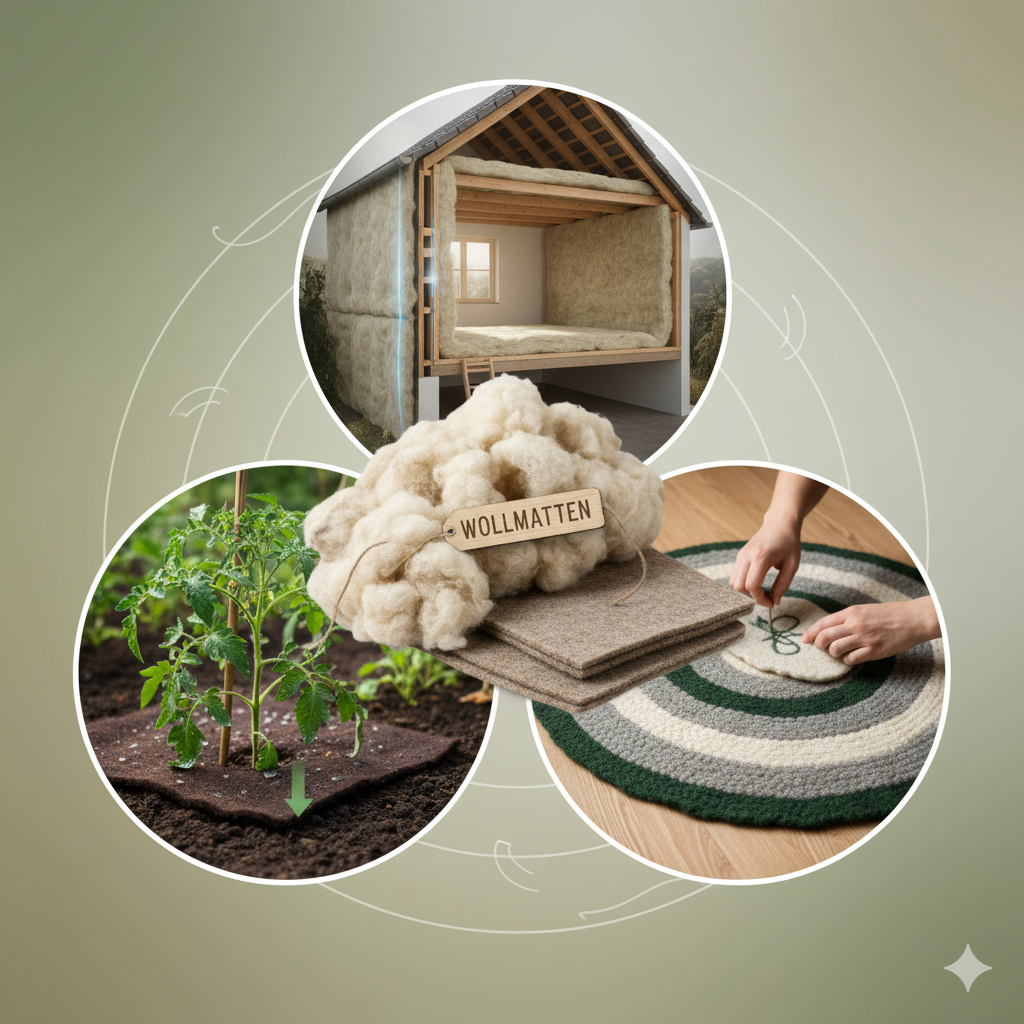
You’ve probably heard of recycled plastic, bamboo flooring, and electric cars. But have you ever heard of Wollmatten?
If you’re scratching your head, you’re not alone. This humble material, whose name simply means “wool mats” in German, is one of sustainability’s best-kept secrets. The problem is, the information about it is all over the place. One site talks about it in the garden, another in your walls, and a third as a trendy rug. It’s enough to make anyone confused.
What if we told you that all these uses are connected? That the same simple mat made from wool can help your garden thrive, slash your energy bills, and make your home cozier, all while being incredibly kind to the planet.
This guide is here to connect the dots. We’re going to unravel the full, fascinating story of Wollmatten, from its start as “waste” wool to its role as a multi-purpose powerhouse. Get ready to see why this natural material is poised to become a cornerstone of a more sustainable future.
What in the World is a Wollmatte? Unpacking the Term
Let’s start with the basics. A Wollmatte is exactly what it sounds like: a mat made from wool. But don’t let its simplicity fool you. This isn’t just a fluffy rug.
Think of it as a versatile, felted fabric made by pressing and bonding natural wool fibers together. This process creates a stable, durable mat that can be tailored for specific jobs. Depending on its mission, a Wollmatte can be:
-
Thin and breathable for protecting soil in your vegetable patch.
-
Thick and dense for insulating the attic of a modern home.
-
Soft and beautiful for a rug in your living room or a canvas for an artist.
The magic is in the material itself. Wool is a superhero fiber, and Wollmatten are its cape.
From Fleece to Functional: The Sustainable Journey of a Wollmatte
The story of how a Wollmatte is made is a perfect example of what’s called a “circular economy”—a fancy term for turning trash into treasure.
It all begins with a sheep getting a much-needed haircut. Shearing is essential for the animal’s health and welfare. But not all the wool is soft enough for your favorite sweater. The coarser, shorter fibers from the belly and legs are often considered “waste wool” and have little value. In the past, this wool might even have been thrown away.
This is where the Wollmatte miracle begins.
-
Scouring (The Big Clean): The raw, greasy wool is thoroughly washed to remove dirt, sweat, and natural lanolin. This leaves us with clean, fluffy fibers.
-
Carding (The Untangle): The fibers are combed by machines to untangle them and align them in the same direction. Imagine it as detangling hair before styling it.
-
Felting & Binding (The Magic): This is where the mat is born. The carded wool layers are subjected to heat, moisture, and pressure. This causes the microscopic scales on the wool fibers to lock together, creating a strong, felted mat—often without any chemical glues at all!
The result? A valuable product is created from a material that was once a nuisance. It’s a brilliant solution that supports farmers and gives us an incredibly eco-friendly product.
The Many Hats of a Wollmatte: Agriculture, Architecture, and Your Home
This is where the Wollmatte truly shines. Its versatility is almost unmatched in the natural world. Let’s explore its three main stages.
In the Garden: Your Soil’s New Best Friend
For gardeners and farmers, Wollmatten are a secret weapon for healthy, chemical-free growing.
-
The Ultimate Water Saver: Wool fibers are like tiny sponges. They can absorb up to 30 times their own weight in water and then release it slowly to plant roots. One study found that plants mulched with wool could go nearly two weeks without watering, compared to just a few days for others. That’s a game-changer in a drought.
-
A Slow-Release Super-Fertilizer: As the wool mat breaks down, it feeds your soil. Raw wool is packed with nitrogen (a key plant nutrient)—between 9% and 14%! Compare that to regular compost, which is only 1-2% nitrogen. It’s like a timed-release vitamin for your garden.
-
Natural Weed and Pest Control: The dense mat physically blocks sunlight, stopping weeds in their tracks. And many gardeners swear that the texture of the wool deters slugs and snails—no toxic pellets needed.
Let’s see how it stacks up against other common materials:
| Feature | Wollmatten | Compost | Synthetic Mulch |
|---|---|---|---|
| Nitrogen Content | 9.3% – 14% | 1% – 2% | 0% |
| Water Retention | Holds 20-30x its weight | Retains moisture | Prevents evaporation |
| Weed Control | Excellent physical barrier | Good suppression | Effective physical barrier |
| Pest Repellent | Deters slugs/snails | No repellent properties | No repellent properties |
| Sustainability | Biodegradable, renewable | Biodegradable | Not biodegradable, plastic-based |
In Construction: The Natural Insulator
As we build greener homes, Wollmatten are stepping into the spotlight as a high-performance building material.
-
Thermal Insulation: Wool is a champion at trapping air. This creates a natural barrier that keeps homes warm in the winter and cool in the summer, reducing the need for heating and air conditioning.
-
Acoustic Insulation: All those air-trapping fibers are also brilliant at absorbing sound. If you live on a busy street or want a quieter home office, wool insulation in the walls or floors can make a dramatic difference.
-
A Healthy Home: Wool is naturally hypoallergenic and resistant to mold and mildew. It helps manage moisture in the air, creating a healthier living environment, especially when paired with other natural materials like wood and clay plaster.
In Your Home: Warmth, Style, and Wellness
This is where you can get hands-on with Wollmatten. Beyond the walls and under the floors, they bring comfort and style right into your living space.
-
Aesthetics and Comfort: A wool mat or sheepskin rug adds instant texture, warmth, and a cozy, “cabin-chic” feel to any room. Drape one over a chair, use it as a soft landing spot by your bed, or let the kids play on it.
Wellness and Practicality:
-
-
Temperature Regulating: Wool keeps you warm when it’s cold and cool when it’s warm. It’s the perfect, breathable material for a nursery or for anyone who feels the cold.
-
Moisture-Wicking: It pulls moisture away from your skin, so you stay dry and comfortable. This makes it a fantastic, non-slip mat for yoga or meditation.
-
Durable and Safe: It’s naturally resilient and fire-resistant. Plus, it’s free from the off-gassing chemicals found in some synthetic rugs and mats.
-
The Future is Woolly: The Growing Market for Wollmatten
This isn’t just a niche trend. The global wool market is booming, valued at over $11 billion and projected to nearly double by 2032. Why? Because people like you are demanding sustainable, non-toxic, and effective products for their homes, gardens, and lives.
We’re starting to see incredible innovations, like hybrid mats that mix wool with hemp or flax for even better performance. The future of Wollmatten is bright, versatile, and deeply rooted in the principles of a circular economy.
Your Wollmatten Questions, Answered!
Q: Are Wollmatten expensive?
They can have a higher upfront cost than plastic or synthetic options. But when you factor in their years of service, water savings, and fertilizing benefits (in the garden), they often pay for themselves over time.
Q: Do they attract pests?
In consistently damp conditions, any organic material can be at risk. However, wool’ natural structure and its ability to wick moisture often make it less appealing. In the garden, many find it actually deters pests like slugs!
Q: How long do they last?
It depends on the use! As insulation in a wall, it can last for decades. As a garden mulch, it will beautifully biodegrade over 6 months to 2 years, feeding your soil as it goes.
Q: Is using wool for mats ethical?
Absolutely. These mats primarily use wool that is considered a byproduct—the coarse fibers that the textile industry doesn’t want. Using it for Wollmatten prevents waste and provides extra income for sheep farmers.
Conclusion: The Simple, Powerful Choice
Wollmatten are far more than just mats. They represent a smarter, more connected way of thinking about the resources we use. They show us that the line between “waste” and “resource” is often just a matter of creativity.
By choosing a Wollmatte for your garden, your home, or your yoga practice, you’re making a choice that is good for you and good for the planet. You’re supporting a circular economy, reducing waste, and tapping into the ancient, intelligent power of natural wool.
It’s time for this unsung hero to step into the spotlight. So, the next time you’re planning a garden project, insulating your home, or just looking for a cozy rug, remember the humble Wollmatte. It’s a small change that makes a world of difference.


